Silicon steel (Fe-Si alloy, typically 1–4.5% silicon) is produced in two main grades: CRGO (Cold Rolled Grain Oriented) and CRNGO (Cold Rolled Non-Grain Oriented). CRGO is engineered so that its magnetic domains align along the rolling direction, making it uniquely efficient in transformer cores where flux travels in one direction. CRNGO, by contrast, offers uniform magnetic properties in all directions, making it ideal for rotating machines such as motors and generators.
Both grades arrive from steel mills as wide coils and must be precision-cut (slit) into narrow strips sized for stamping, winding, or stacking into final components. The slitting process is not merely a cutting operation — it is a quality-critical step. Burrs on strip edges, surface scratches, residual stress, or inaccurate widths can each degrade the magnetic performance of the finished part, increasing core loss (watts/kg) and heat generation in transformers or motors. This is why silicon steel slitting lines require engineering that goes well beyond standard steel service center equipment.
A silicon steel slitting line is a continuous, in-line processing system comprising several functional stations, each engineered to handle the unique properties of electrical steel — its thinness (as low as 0.1 mm), hardness, brittleness at high silicon content, and magnetic sensitivity.
The process starts at the entry end where a master coil — weighing up to 15 tons for E-steel lines and up to 35 tons for standard slitting lines — is loaded onto a motorized uncoiler. The uncoiler mandrel expands to grip the coil's inner diameter securely. A peeler/threading table guides the strip's leading edge into the line without kinking or creasing, which would create permanent magnetic imperfections in grain-oriented grades.
Coil car systems and automated loading arms eliminate the need for operators to manually handle heavy coils, significantly improving workplace safety and reducing coil damage risk.
After the uncoiler, an entry looper accumulates a small reserve of strip material (a "buffer loop") to allow continuous line operation during coil changeovers. The looper maintains consistent strip tension independent of uncoiler speed fluctuations. Guide rollers and edge guides precisely align the strip laterally before it enters the slitter head.
The slitter head houses a pair of arbors (upper and lower) on which alternating disc knives and spacers are mounted. For silicon steel, the knives are typically made from tungsten carbide or high-speed tool steel, ground to extremely tight tolerances. The critical technical parameters are:
| Parameter | Typical Range / Value | Significance |
|---|---|---|
| Knife clearance (% of material thickness) | 5–12% | Controls burr height and edge quality |
| Knife overlap (bite) | 0.02–0.10 mm | Determines cut initiation and strip separation |
| Number of slits (max strips) | Up to 40–50 | Defines output multiplicity per coil |
| Arbor locking pressure | High-pressure hydraulic | Prevents tooling shift during cutting |
| Strip width tolerance | ±0.05 mm or better | Critical for stacking and winding accuracy |
SUMIKURA's slitting lines support both double slitter and turnstile configurations. A turnstile arrangement holds multiple pre-set slitter heads on a rotating platform — while one head is cutting, another is being set up offline, dramatically reducing changeover time.
Correct inter-strand tension is arguably the most critical variable in silicon steel slitting. Too little tension causes strip waviness and loose winding; too much causes elongation or surface marking. Three main tension control technologies are used:
Felt Plate:A weighted felt pad draped over the separated slit strands. Simple and low-cost, but can leave fiber deposits on sensitive surfaces.
Belt Bridle:An endless rubber or polyurethane belt wraps around individual strands, applying precise, surface-safe tension. Preferred for CRGO and premium CRNGO grades. See SUMIKURA's Belt Bridle solution.
Driven Roller Bridle:A set of motor-driven pinch rollers create back tension by maintaining a speed differential. Suitable for thicker gauges and high-speed lines up to800 m/min.
An exit looper provides a buffer between the slitter and the recoiler, allowing independent speed control of the winding station. Individual slit strands are guided by separator arbors and wound onto the recoiler mandrel — either as a single wide set of mults or separated by dividers. The recoiler uses torque-controlled winding to ensure tight, even coils without telescoping. Finished coil diameters and weights are monitored in real time by the line's control system.
While general-purpose slitting lines can process mild steel, stainless, and aluminum, E-steel slitting lines (Electrical Steel Slitting Lines) are purpose-built for the demanding requirements of CRGO and CRNGO grades. SUMIKURA's E-Steel Slitting Lines carry the following key specifications:
| Specification | E-Steel Slitting Line | Standard Slitting Line |
|---|---|---|
| Material grades | CRGO / CRNGO | HSS, CRS, HRS, SS, Aluminium |
| Coil width | 400 – 1,250 mm | Up to 2,500 mm |
| Coil weight | Up to 15 T | Up to 35 T |
| Thickness range | 0.1 – 0.5 mm | 0.2 – 9.0 mm |
| Max. strips | 40 | 50 |
| Line speed | 0 – 300 m/min | 0 – 300 m/min |
| Tension unit | Belt bridle (surface-safe) | Felt plate / belt bridle / rolls |
| Special features | No-contact surface handling, magnetic sensitivity | General precision slitting |
The most significant engineering differentiator is the belt bridle tension system, which applies tension without direct contact from abrasive pads. This preserves the insulating coating (e.g., C5, C6 coating) on CRGO steel, which is essential for reducing interlaminar eddy current losses in assembled transformer cores. Scratching or removing this coating during slitting directly degrades the electrical performance of the finished product.
Modern silicon steel slitting lines are not standalone machines — they are integrated nodes within Industry 4.0 production environments. SUMIKURA's engineering philosophy centers on maximizing automation at every stage to achieve consistent quality, high throughput, and minimal manual intervention.
Tooling changeover — replacing knife sets when changing to a different slit width schedule — is traditionally the most time-consuming and labor-intensive activity on a slitting line. SUMIKURA's in-house designed automatic slitter exchange system uses robotic arms to:
Remove the used slitter head from the arbors, transfer it to a cleaning and inspection station, load a pre-configured replacement head with the correct knife-spacer sequence, and lock it in position — all without operator intervention. The result is changeover times reduced from 30–60 minutes to under 10 minutes, dramatically improving machine utilization.
Line components — including knife gap settings, speed profiles, tension setpoints, and coil tracking data — can be automatically configured from production orders sent by upper-level Manufacturing Execution Systems (MES) or ERP platforms. This eliminates manual data entry, reduces setup errors, and provides complete traceability of every slit coil.
Edge trim and off-gauge strip sections generated during threading and coil changeover are routed to integrated scrap choppers, which chop the scrap into manageable pieces and deposit them into collection bins — automatically, without stopping the line.
Inline vision systems and laser width gauges verify strip width, edge quality, and surface condition in real time. Non-conforming strips can be flagged, rejected, and diverted before they are wound into finished coils. This is especially important for CRGO strips destined for high-efficiency transformer cores where tolerance stack-up over hundreds of lamination layers is a critical quality concern.
Burrs — raised metal fragments along the cut edge — are the primary quality enemy in silicon steel slitting. In transformer laminations, burrs cause short circuits between adjacent layers, dramatically increasing core loss. Burr height must typically remain below 0.01–0.03 mm (10–30 µm) for premium transformer grades. Achieving this requires precise knife clearance (expressed as a percentage of material thickness), sharp knives with no chipping, and accurate arbor alignment.
Silicon steel, particularly CRGO grades, has highly directional mechanical properties. Residual rolling stresses and the anisotropic nature of the material can cause slit strips to develop wavy edges (edge wave) or bow (camber) after slitting. Tension control systems must be tuned precisely to counteract these tendencies without over-stressing the material.
As mentioned above, preserving the insulating coating on electrical steel strips is critical. Equipment contact points — guide rollers, bridle rolls, separator arbors — must use materials and surface finishes that do not abrade or contaminate the coating. SUMIKURA's design uses non-marking roll surfaces and belt bridle systems that apply tension through friction rather than direct pressure, protecting coating integrity.
High-efficiency amorphous core transformer steel and advanced motor lamination steel can be as thin as 0.1 mm. At this gauge, strips are extremely fragile and susceptible to buckling, wrinkling, and tearing during threading and tension transitions. Specialized threading tables, low-mass guide components, and very gentle acceleration/deceleration ramps in the line's speed profile are required.
The demand for precision-slit silicon steel strips is growing rapidly, driven by global electrification trends. Three primary markets are pulling demand:
Grid-scale and distribution transformers use CRGO lamination cores. Tight slit-width tolerances (±0.05 mm or better) directly affect core stacking efficiency and total no-load losses. Utilities and transformer manufacturers face increasingly stringent efficiency standards (e.g., IEC 60076, DOE 2016 regulations in the USA) that reward high-quality slit laminations.
High-performance EV motors use CRNGO lamination stacks, typically 0.20–0.35 mm thick. The motor manufacturing industry demands extremely consistent strip width and flatness for high-speed progressive die stamping. As EV production scales to tens of millions of units annually, demand for precision-slit motor steel is growing at double-digit rates.
IE4 and IE5 super-premium efficiency motors, required by increasingly stringent energy regulations across the EU, China, and Southeast Asia, use higher-grade CRNGO with tighter core loss specifications. This drives demand for premium slitting quality at steel service centers and motor OEM captive slitting lines.
The journey of a slit coil does not end at the recoiler. Finished slit coils must be packaged to prevent damage during transport and storage. SUMIKURA's lines support three levels of packaging automation:
Manual OD Banding: An operator applies banding straps around the coil's outer diameter using a manual or pneumatic banding tool. Cost-effective for low-volume or varied product mix operations.
Semi-Automatic Banding: The coil is positioned automatically at a banding station; the operator initiates the banding cycle. Reduces cycle time and improves band consistency.
Fully Automatic Packing & Palletizing: Robotic systems apply banding straps, wrap coils with protective material, place them on pallets, and apply labels — all without human intervention. This level is preferred for high-volume E-steel operations where throughput and contamination control are paramount.
Choosing the appropriate slitting line configuration involves evaluating several interdependent factors. Buyers should analyze their product mix — the range of grades, thicknesses, and widths they will process — as this determines knife configurations, arbor lengths, and tension system selection. Throughput targets and coil changeover frequency determine the value of automation investments such as turnstile slitters and robotic tooling exchange systems.
Space constraints, utility availability (electrical power, compressed air, hydraulics), and downstream integration requirements (packing, warehouse management, ERP connectivity) should all be evaluated during the specification phase. It is advisable to work with line manufacturers that offer full lifecycle support — from initial specification and machine installation through operator training, spare parts supply, and remote diagnostic services. SUMIKURA provides comprehensive after-sales service from its bases in Japan and China to customers globally.

Your cutting line specialists!
 Factory in Japan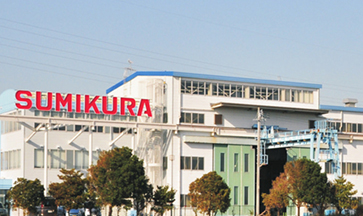
ADDRESS
487-3, Sanshincho, Chuoku, Hamamatsu, Shizuoka, Japan
 Japan local market : +81 53-425-5331
Factory in China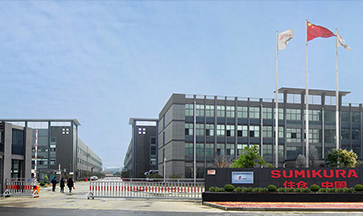
ADDRESS
265 Yixian Road, Deqing, Zhejiang, China
Overseas market : +86 572-883-2016



