
Traditional cut-to-length shearing requires the strip material to pause completely at the cutting station before the blade descends. At moderate speeds this constraint is acceptable, but as line speeds push past 40–50 m/min, the acceleration and deceleration cycles of the looping pit and feed rolls become severe bottlenecks. Each stop-and-go cycle introduces dynamic tensile stress that can cause micro-deformation in thin or high-strength materials, compromise flatness, and generate burrs that require downstream deburring operations.
Oscillated shearing solves this problem by matching the cutter's forward velocity to the strip's linear velocity at the exact moment of contact. The tool neither stops the material nor fights against its momentum. The result is a clean shear executed "on the fly" — a concept that manufacturers in Japan, Germany, and North America have been refining since the early 2000s and which has now reached industrial maturity.
For processors handling automotive body panels, electrical steel laminations, or large-format appliance blanks, the productivity and quality gains are compelling enough that oscillated shear lines are rapidly displacing traditional flying-shear and stop-shear configurations in new installations. Learn more about how Oscillating Shear Lines compare with conventional systems.
The core innovation of the Oscillated Shear Tool lies in its dual-axis motion. The cutting head is mounted on a rotating turret that performs two simultaneous movements:
Rotation (forward tracking): The turret rotates to match the linear velocity of the incoming strip at the cutting point. This synchronization is achieved through a servo-driven control loop that continuously monitors strip speed via encoder feedback and adjusts turret angular velocity in real time.
Oscillation (angular shear): Simultaneously, the blade assembly oscillates through a programmed arc — typically between 0° and 35° — to execute either a straight (90°) cut or an angled (trapezoidal) cut. The oscillation axis is geometrically designed so that the blade tip traces a nearly linear path through the sheet thickness during the cutting stroke, minimizing shear distortion.
Once the cut is complete, the turret rapidly resets — reversing the rotation and returning the oscillation angle to zero — while the strip continues unimpeded. The reset is completed before the next programmed cut length arrives at the shearing zone, enabling continuous high-speed operation.
SUMIKURA's Oscillated Shear Tool is designed to be mounted directly onto the press table, integrating the cutter with the tooling system in a compact, rigid assembly. This architecture eliminates the mechanical compliance that arises when cutter and press are separate machines, improving cut squareness and reducing edge-wave on thin materials. The integrated design also simplifies die changeover, since cutter geometry and press stroke are mechanically coupled. After shearing, cut blanks are transferred to a telescopic belt conveyor, which feeds a magnetic conveyor belt for downstream stacking — a fully automated handling sequence that removes manual intervention at the exit end of the line.
SUMIKURA offers two primary Oscillated Shear Line configurations, each targeting a different production envelope. The specifications below are derived from SUMIKURA's published product data for the Oscillated Shear Lines product pages.
| Parameter | Configuration A (Wide) | Configuration B (Standard) |
|---|---|---|
| Compatible Materials | HSS, CRS, HRS, Aluminum | HSS, CRS, HRS |
| Maximum Strip Width | 2,500 mm | 400–1,850 mm |
| Blank Length Range | — | 500–4,000 mm |
| Oscillation Angle | 0°–35° | 0°–32° |
| Material Thickness | 0.2–4.0 mm | 0.4–3.0 mm |
| Maximum Line Speed | 80 m/min | 80 m/min |
| Shear Type | Stop / Rotary Oscillating | Rotary Oscillating |
The oscillation angle parameter deserves particular attention. A 0° oscillation produces a conventional 90° (straight) cut across the strip width — useful for simple rectangular blanks. As the angle increases toward 32°–35°, the cutter traces a diagonal path, producing trapezoidal blanks that are widely used in automotive roof panels, door inners, and floor crossmembers where material utilization is critical. Angled blanking from coil can reduce scrap rates by 8–15% compared to shearing to rectangular and then trimming in a secondary operation, according to industry studies on nesting efficiency in stamping operations.
An Oscillated Shear Line is rarely operated as a standalone machine. Its full value is realized when it forms the cutting station within a broader coil processing line. SUMIKURA's solution portfolio is designed to provide every major subsystem required for a turnkey installation:
Prior to shearing, coil material must be de-coiled and leveled to remove coil set and crossbow. SUMIKURA's Six-Hi Leveler uses a six-roll configuration that applies alternating bending strains across the strip thickness, progressively neutralizing residual stresses. For high-strength steels where conventional four-roll levelers lack the bending force to reach the elastic limit, the Six-Hi geometry provides the additional mechanical advantage needed to achieve the flatness tolerances (typically ±0.3 mm/m) demanded by progressive die stamping.
After the ROS cuts each blank, it lands on a telescopic belt conveyor that expands to match the blank length without requiring the blank to freefall or slide. From the belt, blanks are transferred to either a Vacuum Stacker (for coated, pre-painted, or aluminum blanks where magnetic attraction cannot be used) or a Magnetic Stacker (for ferrous materials). Both stacker types use programmable position control to build neat, aligned stacks that can be removed by forklift or automated guided vehicle (AGV) without manual sorting.
SUMIKURA's solution range also includes an Edge Cropper for removing the uneven strip edges produced by the slitting operation, ensuring consistent blank width and a clean lateral shear face. For applications requiring oiled blanks — as used in deep-drawing of appliance housings — an integrated Washing Machine and oiling system can be added to the line layout. A Scrap Chopper handles the edge trim and skeleton scrap, reducing it to manageable lengths for baling or briquetting.
Minimizing scheduled downtime is as important as maximizing running speed. SUMIKURA addresses this with purpose-designed changeover systems: the Leveler Cassette Exchange System allows the entire roll cassette of the leveler to be swapped in minutes rather than hours when changing material grades, and the Slitter Exchange System provides rapid tooling changes for the slitting section. These systems are essential for service centers running high-mix, low-to-medium volume orders where changeover frequency is high.
The economic case for an Oscillated Shear Line is strongest wherever three conditions converge: high coil throughput, demanding edge quality specifications, and the need for non-rectangular blank geometries. The following industries represent the primary target markets.
Automotive blanking is arguably the defining application for oscillated shear technology. Roof outers, door inners, hood panels, and floor crossmembers are routinely produced from trapezoidal blanks — not because the stamped part is trapezoidal, but because an angled shear cut reduces trim scrap when the blank is nested in the progressive die. Modern vehicle platforms using advanced high-strength steels (AHSS) with tensile strengths of 600–1,500 MPa place exceptional demands on shear equipment: the line must maintain dimensional accuracy across a wide thickness range and resist elastic springback in the shear face that could cause stacking problems downstream.
Manufacturers of refrigerators, washing machines, and air conditioning units consume vast quantities of pre-painted or galvanized steel sheet. These coatings are sensitive to mechanical damage during handling and shearing. The controlled, low-shock cutting action of the ROS system minimizes paint film cracking at the shear edge — a defect that can cause corrosion in service and cosmetic rejection during assembly line inspection.
Profiled roofing sheets, wall cladding panels, and floor decking are produced in high volumes from galvanized or Zincalume-coated steel. Oscillated shear lines handle the wide-format (up to 2,500 mm) coils used in this sector at speeds that align with the throughput of downstream roll-forming lines, enabling genuine coil-to-profile continuous processing.
Non-grain-oriented (NGO) and grain-oriented (GO) electrical steels for motor cores and transformer cores are often processed on oscillated shear lines that integrate specialized deburring and oiling stations. The burr-free shear quality achieved by the ROS is critical because lamination burrs increase iron loss in assembled cores and can cause inter-laminar short circuits that degrade transformer efficiency.
Oscillated Shear Lines and Blanking Lines are sometimes confused because both produce flat blanks from coil. The distinction is important:
A Blanking Line uses a press-mounted die that closes around the blank perimeter, producing any 2D outline shape — circular, irregular, or multi-windowed. The press tool is expensive to manufacture, requires periodic regrinding, and limits the line speed to the press stroke rate (typically 20–60 strokes/minute). Blanking lines are the correct choice when blank geometry cannot be produced by straight or angled shear cuts.
An Oscillated Shear Line produces only straight-edged blanks (rectangular or trapezoidal) but does so at significantly higher speeds and with lower tooling cost. The shear blades are simple, long-life tools compared to shaped blanking dies. For the large proportion of stamping applications where a rectangular or trapezoidal blank is geometrically sufficient — and where blank width can be achieved by the upstream Slitting Line — an Oscillated Shear Line delivers a lower total processing cost.
Many plants operate both technologies: a slitting line prepares slit coils to the required width, an oscillated shear line cuts them to length at high speed for simple-geometry blanks, and a blanking press handles complex-profile parts. SUMIKURA's complete Lines portfolio — including Cut-To-Length Lines, Slitting Lines, Oscillated Shear Lines, and Blanking Lines — allows this multi-technology approach to be sourced from a single specialist supplier, simplifying integration, documentation, and after-sales support.
Modern oscillated shear lines are controlled by a PLC/servo architecture in which multiple drive axes — decoiler tension, leveler roll speed, belt bridle tension, turret rotation speed, oscillation angle, and stacker positioning — are coordinated by a master motion controller. The synchronization between turret rotation and strip speed is the most demanding control task: errors of more than a fraction of a percent in velocity matching at the cutting moment result in length inaccuracy or strip marking.
Industrial implementations typically use encoder-based strip speed measurement with dynamic feedforward compensation for strip acceleration during deceleration of the preceding blank. Some advanced configurations integrate vision-based measurement of the strip edge to detect tracking deviations and automatically correct the feed roll alignment — reducing edge wave and camber on wide-format lines.
The HMI (Human–Machine Interface) on SUMIKURA lines provides operators with digital recipe management: each blank order can be stored as a recipe including target length, oscillation angle, line speed, and stacking parameters. Changeover between orders requires only recipe recall and a few seconds for mechanical settling — a stark contrast to the mechanical adjustments required on older stop-shear lines.
Integration with Manufacturing Execution Systems (MES) or ERP platforms is supported via OPC-UA communication protocols, enabling real-time production data collection, remote diagnostics, and planned maintenance alerts based on actual cycle counts rather than calendar intervals.
SUMIKURA Co., Ltd. is a Japanese manufacturer headquartered at 487-3, Sanshincho, Chuoku, Hamamatsu, Shizuoka, Japan — a region with deep roots in precision machinery manufacturing. The company also operates a production facility in Deqing, Zhejiang, China (265 Yixian Road), serving the Asian and global market with the full range of coil processing line equipment.
SUMIKURA specializes in the design, manufacture, and commissioning of complete coil processing solutions: Oscillated Shear Lines, Cut-To-Length Lines, Slitting Lines, and Blanking Lines, together with the full range of solution components — levelers, stackers, scrap choppers, washing machines, and cassette/slitter exchange systems. The company's philosophy centers on high precision, long equipment life, and close customer collaboration from initial specification through after-sales service.
For technical inquiries, line specifications, or project consultations:
Japan: +81 53-425-5331
Overseas: +86 572-883-2016
Contact SUMIKURA online → | Become an Agent →

Your cutting line specialists!
 Factory in Japan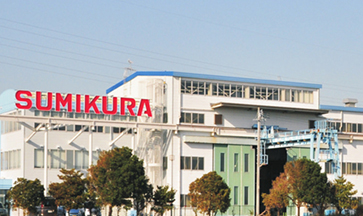
ADDRESS
487-3, Sanshincho, Chuoku, Hamamatsu, Shizuoka, Japan
 Japan local market : +81 53-425-5331
Factory in China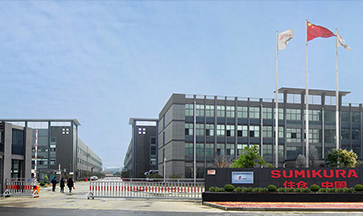
ADDRESS
265 Yixian Road, Deqing, Zhejiang, China
Overseas market : +86 572-883-2016



