
Oscillated Shear Tool
1. This tool is used for shearing sheet metal, capable of cutting shapes such as rectangles and trapezoids.
2. This equipment is mounted on the press table, with an integrated cutter.
1. This tool is used for shearing sheet metal, capable of cutting shapes such as rectangles and trapezoids.
2. This equipment is mounted on the press table, with an integrated cutter.
After the tool, the cut sheet will be transported to the telescopic belt and via the magnetic conveyor belt to stacking.
Picture of Rotary Oscillated Shear Unit in CTL Line.
For more help,
Chat online now  or call 0572-883-2016.
Discover SUMIKURA's Oscillating Shear Lines — engineered for continuous, burr-free, high-speed sheet metal cutting at up to 80 m/min. Explore the Rotary Oscillated Shear (ROS) tool, technical specs, compatible materials, and full-line integration options.
Oscillating shear lines are advanced coil processing systems designed to cut sheet metal continuously at high speed without stopping the material feed between cuts. Unlike conventional guillotine or stop-type shears, which require the strip to halt before each stroke, an oscillating shear system uses a cutting tool mounted on a rotating and oscillating mechanism that travels with the sheet during the cut and then resets instantly for the next cycle. The result is uninterrupted material flow, dramatically higher throughput, and significantly reduced mechanical fatigue on both tooling and structural components.
SUMIKURA Co., Ltd., a specialist coil processing line manufacturer headquartered in Hamamatsu, Shizuoka, Japan, has developed a comprehensive range of Oscillated Shear Lines covering both stop-type and rotary oscillating configurations. These lines are engineered to handle high-speed steel, cold rolled steel, hot rolled steel, and aluminum, making them applicable across the automotive, appliance, construction, and electronics sectors.
The centerpiece of SUMIKURA's oscillating shear offering is the Rotary Oscillated Shear (ROS) unit — a precision cutting mechanism mounted directly on the press table with an integrated cutter assembly. The ROS tool is capable of producing rectangular cuts as well as trapezoidal profiles, which makes it particularly valuable for automotive body panel blanking and appliance part production where non-orthogonal shapes are common.
In the ROS system, the turret carrying the cutting blades simultaneously rotates to match the linear velocity of the incoming sheet and oscillates transversally to complete the shear stroke. Once the cut is executed, the turret reverses its oscillation angle and returns to the home position while the sheet continues moving forward. This synchronized motion eliminates the idle time that defines conventional stop-type shearing and is what enables line speeds of up to 80 meters per minute to be sustained reliably.
After shearing, the cut blanks are transferred via a telescopic belt conveyor to a magnetic conveyor belt on the exit side, which transports them to the downstream stacking station. This smooth, continuous handoff prevents blank collisions, reduces surface marking, and keeps the downstream vacuum stacker or magnetic stacker fed at the correct cadence without buffer gaps or pile-ups.
SUMIKURA's oscillating shear lines are available in two primary configurations to match different production requirements.
The first configuration handles widths up to 2,500 mm, material thickness from 0.2 mm to 4.0 mm, and an oscillated angle range of 0° to 35°. It supports both stop-type and rotary oscillating shear modes, making it flexible for mixed production environments where both standard rectangular blanks and angled cuts are needed within the same line.
The second configuration is optimized for rotary oscillating operation with material widths from 400 mm to 1,850 mm and lengths from 500 mm to 4,000 mm. The oscillated angle spans 0° to 32°, and material thickness ranges from 0.4 mm to 3.0 mm. Both configurations achieve a maximum line speed of 80 m/min and accept high-speed steel (HSS), cold rolled steel (CRS), and hot rolled steel (HRS) as standard compatible materials.
The oscillated angle parameter is particularly significant from a technical standpoint. By cutting at an angle to the strip axis rather than perpendicular to it, the shear line can produce trapezoidal blanks suited to progressive stamping dies, roof panel profiles, and tailor-welded blank preparation. The ability to adjust this angle between 0° and 35° on the fly — without stopping the line — is one of the defining engineering advantages of SUMIKURA's rotary oscillating architecture over fixed-angle competitors.
Continuous material flow without stop-and-go cycling. Because the cutting tool travels with the sheet during the shear stroke, the strip never decelerates between cuts. This removes the inertial loading cycles that wear out feed rollers, pinch rolls, and loop pit components in stop-type lines, and it eliminates the acceleration transients that can introduce length measurement errors in encoder-based cut-to-length control systems.
Burr-free, low-impact cutting. The progressive shear action of the oscillating blade — which engages the metal along a swept arc rather than a single simultaneous line — distributes cutting force across a longer dwell time. This produces a cleaner shear face with minimal burr height, reducing or eliminating the need for secondary edge finishing operations before forming or welding. It also lowers the peak tonnage required from the press drive system, which has a direct positive effect on frame fatigue life and servo motor sizing.
Wide material compatibility. The system handles materials from ultra-thin 0.2 mm foil-gauge cold rolled steel to 4.0 mm structural HSS in a single line configuration, which is particularly valuable for metal service centers serving multiple customers with different incoming coil specifications. No tooling change is required to shift between material grades, as clearance adjustment is managed through the automated tool setting system.
Integration with upstream and downstream solutions. An oscillating shear line does not operate in isolation. SUMIKURA designs each line for seamless integration with upstream components including the six-hi leveler for flatness correction, the belt bridle for strip tension control, and the edge cropper for mill-edge removal. On the exit side, the line connects to vacuum or magnetic stackers, scrap choppers for edge trim disposal, and washing machines for surface preparation before coating or painting.
Automatic tool change and cassette exchange. Downtime during tool changeover is a primary source of OEE loss on high-volume shear lines. SUMIKURA addresses this through its cassette exchange system, which allows the leveler cartridge and shear tool assembly to be pre-staged and swapped in a single, guided operation without disassembling the line structure. Similarly, the slitter exchange system accelerates rotary blade set changes on combination lines. These systems together support sub-20-minute full changeover times on properly configured lines.
The oscillated shear tool itself is a precision sub-assembly mounted on the press table. The integrated cutter design means blade alignment is maintained within the tool cassette, so blade-to-blade clearance — which governs cut quality and burr height — does not need to be re-established after every tool change. SUMIKURA engineers the blade material and edge geometry to match the hardness and work-hardening characteristics of the strip being processed, which is particularly important when cutting HSS grades whose yield strength can exceed 780 MPa.
The tool geometry allows both rectangular and trapezoidal shear profiles. For trapezoidal blanks, the blade carrier is indexed to the programmed oscillated angle before each production run. The angle is set and locked via the control interface, and the rotary oscillating mechanism compensates for the non-perpendicular cut geometry automatically during motion synchronization. This capability is what enables SUMIKURA's oscillating shear lines to serve as direct pre-press blanking solutions for stamping presses, reducing the number of progressive die stages needed to achieve a final blank shape.
SUMIKURA designs oscillating shear technology as a module within a complete coil processing ecosystem. The upstream end of a full line typically begins with a decoiler or uncoiler feeding the coil into a straightening and leveling section. For applications requiring exceptional flatness — such as exposed automotive outer panels or precision electrical laminations — the six-hi leveler with its anti-camber rolls and hydraulic crown control is the preferred solution, capable of correcting edge wave, center buckle, and longitudinal bow simultaneously.
From the leveler, the strip passes through the belt bridle which maintains a consistent strip tension zone between the leveler and the shear, preventing the tension fluctuations that would otherwise cause length variation at the cut point. An edge cropper may be positioned upstream of the shear to remove the uneven mill edge before blanking, ensuring that the sheared blank has consistent width and that any edge cracking from the original coil edge is eliminated before forming.
The oscillating shear unit itself is the heart of the line, followed by the telescopic conveyor and magnetic transfer system that delivers blanks to the stacking station. Depending on whether the blank material is ferromagnetic or non-ferromagnetic (aluminum), the stacker will be a magnetic stacker or a vacuum stacker respectively. For lines processing oiled or coated strip, a washing machine may be positioned downstream of the shear to clean blank surfaces before stacking or pallet dispatch.
This complete, modular line architecture reflects SUMIKURA's position as a full-system integrator. Customers can commission individual solutions or a complete turnkey cut-to-length line with the oscillating shear as its primary cutting station, supported by SUMIKURA's service and maintenance network for ongoing operational support.
Oscillating shear lines serve industries where high-volume, high-accuracy blanking from coil is a production bottleneck.
In automotive manufacturing, oscillating shear lines produce body panel blanks, door inner reinforcement parts, and structural chassis components. The ability to generate trapezoidal and angled blanks directly from the coil reduces scrap versus rectangular blanking, which is critical when processing expensive advanced high-strength steels.
In appliance manufacturing, the lines cut casing panels for refrigerators, washing machine drums, oven doors, and air conditioning housings, where edge quality directly affects downstream forming and painting adhesion.
In metal service centers, oscillating shear lines provide the flexibility to process multiple orders with different blank dimensions, materials, and oscillated angles in a single shift, with rapid changeover between jobs supported by the cassette and tool exchange systems.
In construction materials, the lines cut cladding panels, roofing sheets, and architectural metal components requiring precise length and angle tolerances that conventional guillotine shears cannot achieve at acceptable production speeds.
In electrical and electronics manufacturing, the lines process thin-gauge cold rolled steel and silicon steel laminations for motor cores and transformer stacks, where burr-free edges are a functional requirement, not merely an aesthetic one, because burrs in lamination stacks increase eddy current losses and degrade magnetic efficiency.
SUMIKURA Co., Ltd. was established in Japan and combines Japanese engineering discipline with manufacturing operations at its China facility located at 265 Yixian Road, Deqing, Zhejiang. This dual-base structure allows SUMIKURA to serve global customers with Japanese design standards while maintaining cost-competitive production and fast lead times for international orders. The company's Japan headquarters is located at 487-3 Sanshincho, Chuoku, Hamamatsu, Shizuoka, with the overseas market contact reachable at +86 572-883-2016.
SUMIKURA describes itself as a dedicated cutting line specialist, and this focus is reflected in the depth of its solution portfolio. Rather than offering generic coil processing equipment, SUMIKURA engineers each component — from the oscillated tool and the leveler to the stacker and scrap handling system — to work together as a validated system. Customers considering a blanking or cut-to-length investment can review the full lines portfolio, including blanking lines and slitting lines, as complementary or alternative configurations depending on their blank geometry and production volume requirements.
Prospective customers and distribution partners can review SUMIKURA's corporate philosophy and sales network to understand the company's commitment to long-term customer relationships, or explore agent partnership opportunities to represent SUMIKURA's lines in regional markets. For technical inquiries, specifications, or quotation requests, the contact page provides direct access to the sales engineering team.

Your cutting line specialists!
 Factory in Japan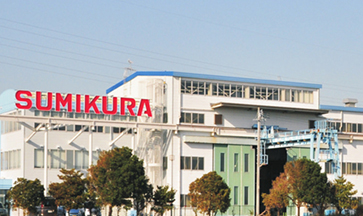
ADDRESS
487-3, Sanshincho, Chuoku, Hamamatsu, Shizuoka, Japan
 Japan local market : +81 53-425-5331
Factory in China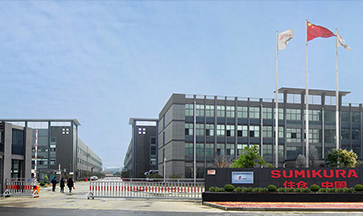
ADDRESS
265 Yixian Road, Deqing, Zhejiang, China
Overseas market : +86 572-883-2016


