
High-strength steel (HSS) and aluminum have become two of the most important materials in modern manufacturing. Automotive lightweighting, construction, appliance production, renewable energy equipment, and metal service centers all require sheet materials with excellent dimensional accuracy and surface quality. However, these materials also introduce significant processing challenges that conventional cut-to-length equipment cannot efficiently solve.
Modern Automation Cut To Length Lines combine intelligent control, high-speed processing, precision leveling, and automated material handling into one integrated production system. By reducing manual intervention and optimizing every production stage, manufacturers can achieve higher productivity, lower operating costs, and superior sheet quality.
According to SUMIKURA's product information, its automated cut-to-length solutions are designed for HSS, CRS, HRS, stainless steel, and aluminum, with processing capacities up to 35-ton coils, 2,500 mm width, 0.2–9.0 mm thickness, and line speeds reaching 80 m/min, making them suitable for a wide range of industrial applications.
Although both materials are widely used, their mechanical characteristics are completely different.
High-strength steel offers outstanding tensile strength but creates much higher leveling forces, increased roll wear, greater springback, and higher cutting loads. Maintaining flatness while minimizing internal stress becomes increasingly difficult as yield strength increases.
Aluminum presents another set of challenges. Its relatively soft surface is highly susceptible to scratches, roller marks, edge damage, and handling defects. Even slight surface imperfections may become unacceptable after painting or anodizing.
A modern Automation Cut To Length Line must therefore provide:
This requires intelligent coordination between the decoiler, leveler, measuring system, flying shear, stacking unit, and automation software.
Leveling is often the most critical process affecting final sheet quality.
Traditional levelers typically require lengthy manual adjustment whenever material thickness or strength changes. This increases downtime and creates inconsistency between production batches.
Modern automated systems solve this through:
SUMIKURA's Cut To Length Lines feature cassette-type leveling systems that support automatic roll exchange according to different material characteristics, reducing setup time while maintaining excellent flatness for both steel and aluminum processing.
For manufacturers processing multiple coil grades every day, automatic leveling dramatically improves production flexibility.
Conventional stop-and-cut systems require the strip to pause before every cut.
While suitable for thicker materials, this method limits throughput and increases cycle time.
Flying shear technology allows continuous strip movement during cutting, offering several advantages:
Depending on material thickness, manufacturers can choose between stop shears, rotary shears, or flying shears.
SUMIKURA's Automation Cut To Length Lines support both stop shear and rotary shear configurations, enabling manufacturers to optimize performance according to production requirements.
Surface quality is becoming increasingly important as more manufacturers process pre-painted steel, stainless steel, and exposed aluminum.
Common causes of surface defects include:
An advanced automation system minimizes these risks through:
SUMIKURA's automated stacking systems use magnetic or vacuum technologies designed to protect sheet edges and finished surfaces while maintaining continuous production at high speeds. Multi-station stacking also allows completed sheet packs to be removed without stopping the production line.
These features are particularly valuable for industries producing exposed automotive panels or decorative aluminum products.
Production flexibility is no longer optional.
Many service centers process dozens of different coil specifications within a single shift.
An Automation Cut To Length Line should accommodate:
| Parameter | Typical Capability |
|---|---|
| Material | HSS, CRS, HRS, Stainless Steel, Aluminum |
| Thickness | 0.2–9.0 mm |
| Coil Width | Up to 2,500 mm |
| Coil Weight | Up to 35 Tons |
| Sheet Length | Up to 12,000 mm |
| Processing Speed | Up to 80 m/min |
These specifications allow manufacturers to process everything from thin aluminum sheets to heavy-gauge structural steel using one integrated production line.
Automation Cut To Length Lines are widely deployed across industries requiring high-volume precision sheet production.
Typical applications include:
Manufacturers seeking complete coil processing solutions may also integrate Blanking Lines or Slitting Lines into their production facilities to create highly flexible processing centers capable of handling diverse customer requirements.
Choosing the right Automation Cut To Length Line requires evaluating much more than maximum speed.
Important technical considerations include:
Manufacturers processing both steel and aluminum often benefit from hybrid configurations that include multiple leveling cassettes, automated recipe management, and intelligent parameter adjustment. These capabilities reduce setup time, improve repeatability, and support mixed-material production with minimal operator intervention.
SUMIKURA designs customized Automation Cut To Length Lines that integrate automated coil loading, precision leveling, intelligent measuring, rotary or stop shearing, and automated stacking into a complete production solution. Their modular approach allows manufacturers to configure equipment according to material type, production capacity, and downstream manufacturing requirements while maintaining high efficiency and product quality.
As manufacturers continue adopting high-strength steel and lightweight aluminum, production requirements are becoming increasingly demanding. Higher dimensional accuracy, improved surface quality, shorter changeover times, and lower operating costs are now essential competitive advantages.
Modern Automation Cut To Length Lines address these challenges through intelligent automation, precision leveling, advanced flying shear technology, automated stacking, and flexible machine configurations. By combining these technologies into one integrated system, manufacturers can achieve higher throughput, consistent sheet quality, reduced downtime, and greater production flexibility for today's evolving metal processing industry.

Your cutting line specialists!
 Factory in Japan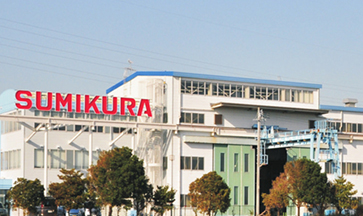
ADDRESS
487-3, Sanshincho, Chuoku, Hamamatsu, Shizuoka, Japan
 Japan local market : +81 53-425-5331
Factory in China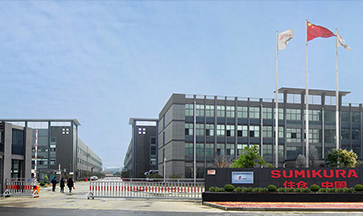
ADDRESS
265 Yixian Road, Deqing, Zhejiang, China
Overseas market : +86 572-883-2016



